
July 1st, 2024, will long be remembered by Barbadians — especially those whose livelihoods depended on the sea. On that day, Hurricane Beryl swept across the island, crippling the fishing industry and leaving many fisherfolk still struggling to piece their lives back together.
As the country works through the long road of recovery, two challenges have emerged as among the most urgent for the fishing community: securing funding to rebuild and confronting the strain on local food security. These pressures show how deeply the storm disrupted not only individual livelihoods but also the wider systems that supply households across the island with fish.
According to the Fisheries Disaster Recovery Report, many fishermen suffered severe losses, with some still working to revive damaged vessels even a year later. The ongoing effort to repair boats, replace equipment, and resume operations highlights how gaps in support and slow access to relief continue to shape the future of Barbados’ fishing sector.
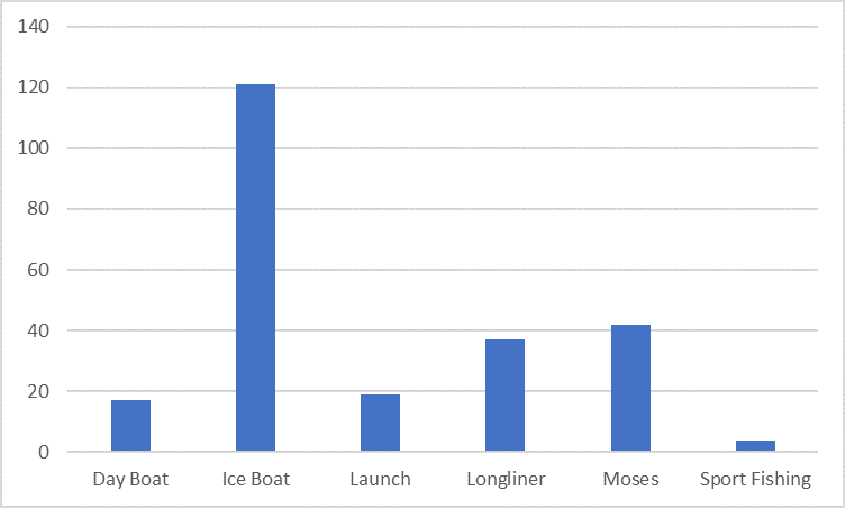
The reduced number of operational vessels has had downstream effects on those who rely on steady fish supplies.
Fish vendor and Secretary at the Barbados National Union of Fisherfolk Organizations (BARNUFO), Kerry-Ann Howell-Browne always showed up in her apron, boots and head covering, ready to tackle the catch of the day. But after Hurricane Beryl hit, she had to leave her gear behind- instead, she sits and wonders when things will go back to the way they were. The storm sank two of the boats she worked with, and the other was under repair.
As vessels remained out of operation for extended periods, reduced fishing activity also affected fish availability, raising broader concerns about the stability of local food security.
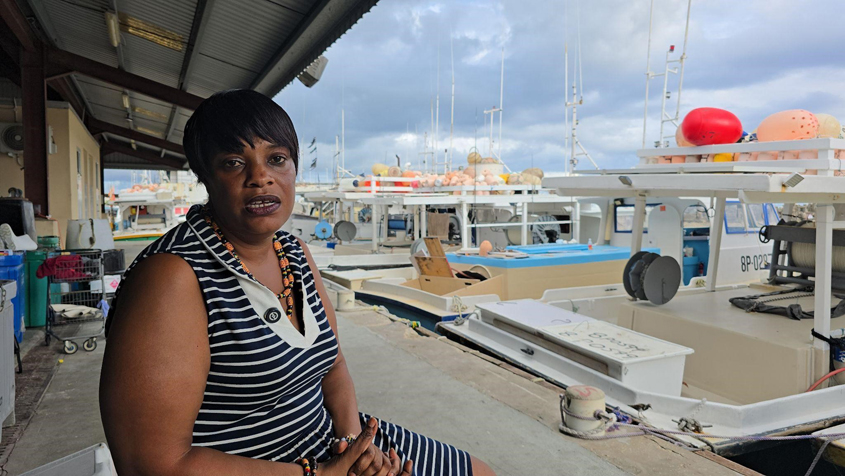
“After a disaster like Beryl, when we get fish, we try to get it off as quickly as possible but then sometimes fish right now is not selling as you would like it to. The boats are not bringing as much as they used to,” Kerry-Ann says as she passes many empty stalls.
“Climate change comes into play right now because some fish are not coming like the way they used to. They have changed and the fishermen now have to change with the climate,” she explained.
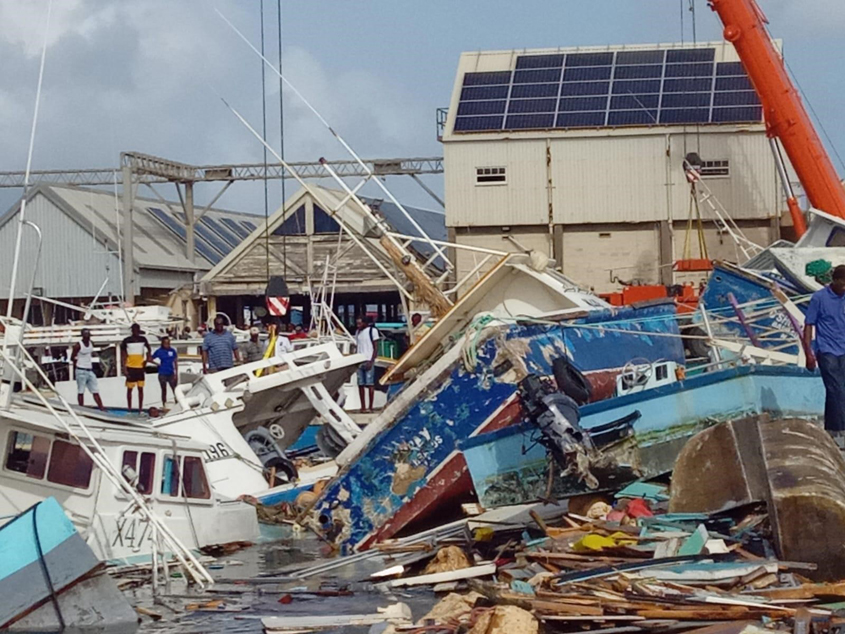
President of the Barbados National Union of Fisherfolk Organisations (BARNUFO), Vernel Nichols, also said Hurricane Beryl inflicted unprecedented damage on the fisheries sector, unlike anything she had ever seen before. She also stressed that rebuilding public trust will be an essential consideration as the industry considers possible changes to its operations following customer concerns about fish prices.
“When we have fish, and we access the fish, we put them out on the market. I know a lot of the public has been crying out for the fish prices, and I am trying to work with the fisherfolk to see what is the issue and look at the issue of pricing,” Nicholls explained.
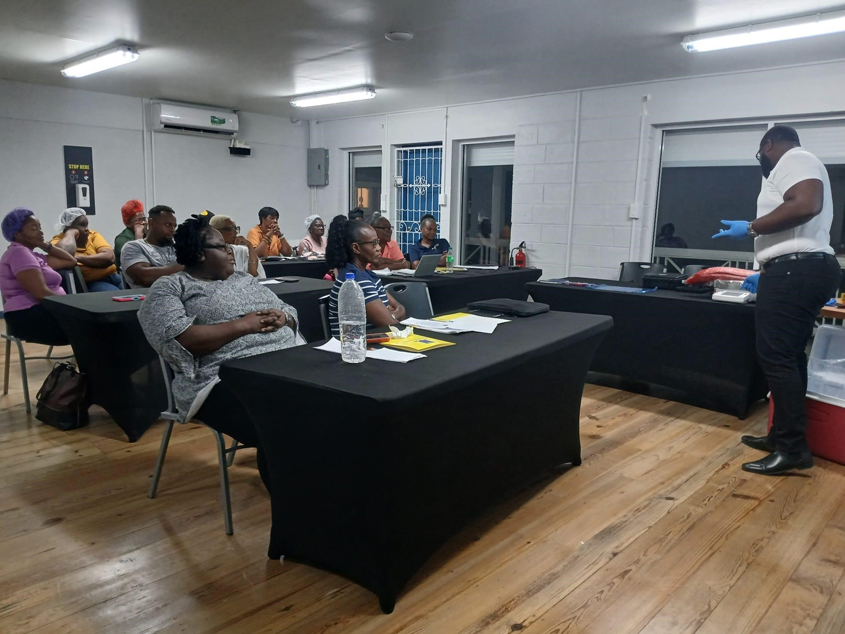
To address this, BARNUFO launched metrology training for vendors to improve weight estimation and transition to regulated scales that display weights to both buyers and sellers.
She believed these improvements would help rebuild confidence in the local fish market. Recovery, however, also depends on the level of financial assistance that fishers can access.
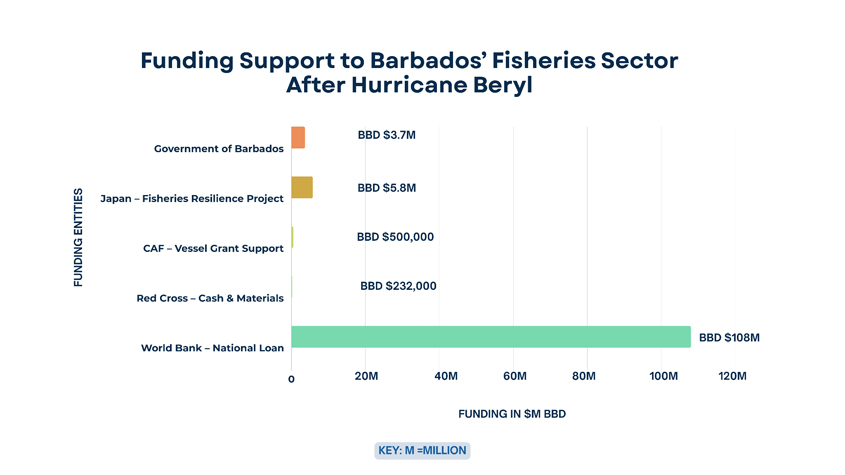
That support came from several agencies after Beryl, including the Government of Barbados, the World Food Programme, the Red Cross, the World Bank, and the Japanese government, which provided financial assistance to fisherfolk.
Boat owners (boat agents) received three monthly payments of BBD $1,500 each through the Hurricane Beryl Fisheries Support Programme, launched by the Barbados Government in collaboration with the UN World Food Programme (WFP).
Fish vendors were granted a single cash transfer of BBD $1,800. A Business Interruption Benefit was also extended to boat owners whose vessels remained under repair, providing about $2,000 per month, along with similar benefits for crew members.
Additionally, Prime Minister Mia Amore Mottley announced a grant covering 25% of the cost of new boats or repairs, supported by a $500,000 donation from the CAF Development Bank of Latin America and the Caribbean.
To date, over $3.7 million has been disbursed to fisherfolk, including $2.75 million in business interruption benefits.
The Barbados Red Cross, to boost assistance to fish vendors, donated cash and vouchers totalling $232,200 BBD to 129 fish vendors and 15 fishermen, along with fish-pot materials valued at $24,874.93.
The Japanese Government provided US$2.9 million in funding assistance to the fisheries sector through the Barbados Coastal Fisheries Resilience Project.
However, Delbert Forde, boat owner and Vice President of the Bridgetown Fisherfolk Association of Barbados, highlighted concerns about funding assistance for fisherfolk.
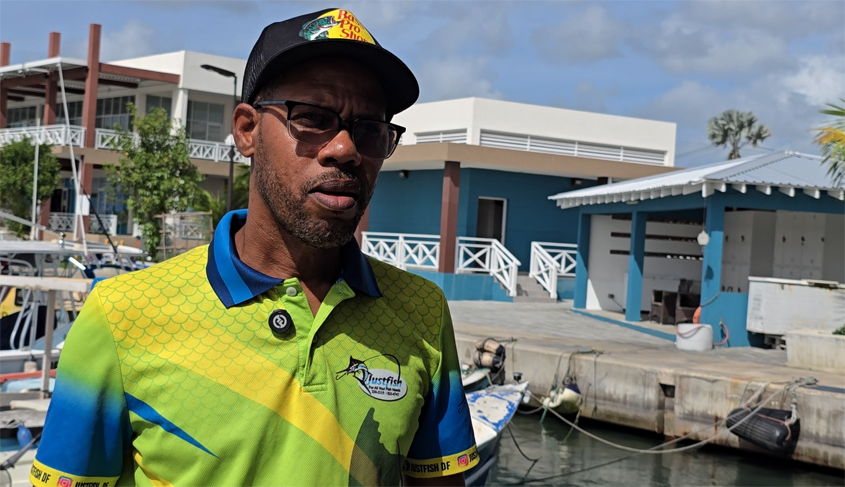
According to Forde, some who were not active in the industry still received aid while those who desperately needed it did not, noting vendors were particularly dissatisfied after promises of three months of payments were reduced to a single one.
“Vendors weren’t pleased in the way the fundings were dealt with. It was told that people who paid NIS will get funding first. Fishermen will get X amount of money for three payments, and the vendors will get the same three months as well.
“What happened then is in the process of all of that, it changed. The vendors got one payment, and the fishermen got all of their payment. The vendors were promised X amount in the same order, and that was changed in the process,” he claimed.
The financial strain forced many, including Forde, to “dip into savings”.
The BARNUFO President, Vernel Nichols, also shared these concerns and suggested that the Government needed to build trust with organisations that work on the ground with the people who serve as distributors of funds.
“There should always be checks and balances that are put in place to support accountability, and because BARNUFO is the National Organisation for fisherfolk, BARNUFO would have to put the necessary things in place to ensure that each organisation is accountable and that they know who their people are,” she said.
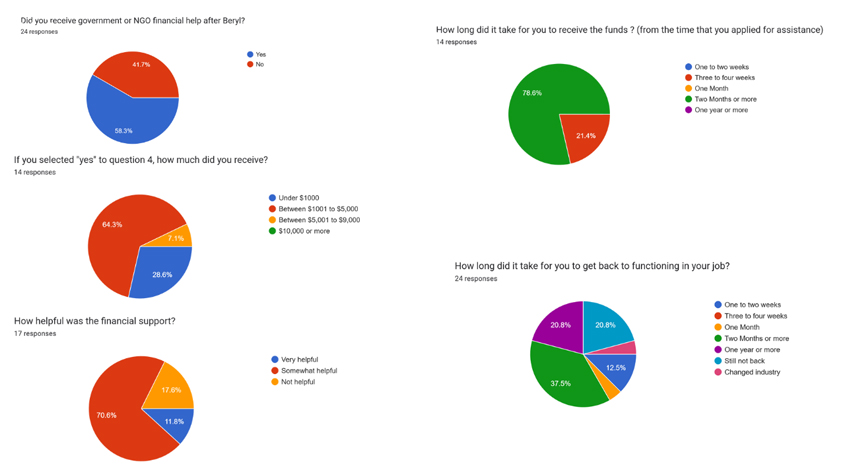
A survey for this article was distributed through trusted fisher organisations, NGOs, and government channels, and responses were gathered from 24 participants. While this is a small sample, the feedback offers a useful indication of the challenges fishers faced when seeking recovery support after Hurricane Beryl.
Among the respondents, 14 reported receiving some form of assistance; however, their responses show uneven access to support, with both the amounts received and the waiting periods varying widely.
Most of the 14 said they waited more than two months before any funds were released, while only a few received help within several weeks.
Taken together, these responses provide a snapshot of how recovery support was accessed and the timelines involved during the post-Beryl period. Several formal requests were made for updated official figures on Hurricane Beryl recovery funding; however, no information was provided by the time of publication, leaving some aspects of the funding picture still undefined.
Alongside these individual experiences, officials outlined several measures introduced to support the wider sector.
Chief Fisheries Officer Dr Shelly-Ann Cox said the post-Beryl response included a business interruption benefit, a vessel repair rebate, and cash assistance from the Red Cross and the World Food Programme.
Under the vessel replacement project, boat owners with total losses will receive a 25% government grant and access to a financing scheme to cover the remaining 75% of the cost to replace their boats.
Cox shared that the government provided the funding assistance, and the World Bank provided a 54 million US loan, which she said went beyond the focus on fisheries.
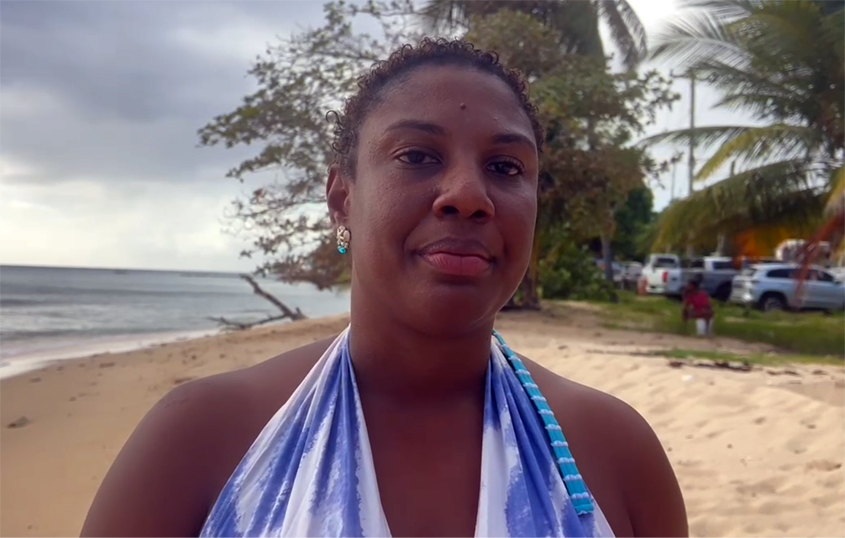
“There will be some coastal protection works here at Six Men’s as well as at Paynes Bay. Our colleagues at the Bridgetown Port, as well, had significant damage, so the project funds will support that. The Department of Emergency Management (DEM) will get support for early warning systems and to enhance their information platform,” she said.
Cox noted that the government has already paid out more than $7 million in interruption benefits and relief, with continued support for captains, crew members, boat owners and fish vendors.
However, Beryl identified gaps in protocols for fish markets, aquaculture, and processing facilities, especially after storm surge damaged ice boxes and equipment. As a result, the fisheries plan is being updated to include all subsectors, not just vessel safety.
She also warned that climate variability was producing stronger, more intense weather events, adding that infrastructure such as the Bridgetown harbour must be strengthened.
This article forms part of the Caribbean Disaster Preparedness Project, a six-month fellowship programme led by the Public Media Alliance (PMA), with support from the UNESCO Caribbean Office and the UNESCO International Programme for the Development of Communication (IPDC).
The project brought together 12 fellows from Barbados, Grenada and Trinidad and Tobago, consisting of journalists, producers and content coordinators who, over the last few months of the programme, had opportunities to develop and test storytelling tools in the field, sharpening their skills in data journalism, and working together on disaster preparedness stories relevant to their communities.
This story was produced through research conducted by the Barbados Team, comprising Ashada Joseph, Tré Greaves, Esther Jones, Kristojay Paul, and Gabrielle Williams.
The post Staying Afloat Beyond The Boat appeared first on nationnews.com.